
Lighting plays an important role in how people experience homes, offices, shops and commercial buildings. The right lighting can make a room more comfortable, improve visibility, support everyday tasks and help create a welcoming atmosphere. From simple lamps for indoor spaces to specialised lighting for commercial environments, choosing the right solution involves more than selecting a bulb that fits a socket.
Lamps4u is a keyword associated with lighting products, fixtures and lighting-related solutions. Search results also identify Lamps4U FZCO as a Dubai-based lighting manufacturer and distributor associated with energy-efficient lighting and environmentally responsible lamp disposal initiatives. Understanding this context helps visitors explore the different aspects of modern lighting and make informed decisions about products, applications and maintenance.
Whether you are researching lamps for your home, comparing lighting technologies or looking for information about commercial lighting, it is useful to understand how different products work and where they are most effective. This homepage introduces the key lighting concepts, practical considerations and important features that can help you identify suitable lighting solutions for your needs.
What Is Lamps4u?
Lamps4u is a search term associated with lighting products and services, including lamps, lighting fixtures and energy-efficient lighting solutions. Depending on the website or business being referenced, the name may relate to home lighting, decorative fixtures, commercial products or specialised lighting equipment.
In the commercial lighting sector, Lamps4U FZCO has been described as a UAE-based manufacturer and distributor of lighting products and fittings. Publicly available information also associates the company with the supply of energy-efficient lighting and equipment designed to support responsible handling of used lamps.
For visitors, the most useful starting point is to identify the type of lighting they need. A table lamp for a bedroom has different requirements from a high-bay light for a warehouse or an outdoor fixture designed to withstand changing weather conditions. Understanding the intended application makes it easier to compare suitable products.
The term Lamps4u can therefore be explored through several related areas, including lighting technology, fixture design, energy consumption, workplace illumination, maintenance and recycling. Each area contributes to a more complete understanding of how lighting products are selected and used.
Lamps4u at a Glance
The following table provides a quick overview of the main topics associated with Lamps4u and modern lighting solutions.
| Detail | Overview |
| Main topic | Lamps, lighting fixtures and lighting solutions |
| Relevant markets | Residential, commercial and industrial environments |
| Lighting technologies | LED, fluorescent, CFL and other suitable lamp technologies |
| Common applications | Homes, offices, retail spaces, warehouses and outdoor areas |
| Important considerations | Brightness, energy consumption, colour temperature and compatibility |
| Sustainability factors | Energy efficiency, product lifespan and responsible disposal |
| Commercial context | Lamps4U FZCO has been associated with lighting distribution in the UAE |
| Buying objective | Match lighting performance with the intended space and budget |
Product availability, certifications, specifications and services can vary by supplier and product model. Buyers should check the relevant product documentation and current business information before making a purchasing decision.
Main Features of Modern Lamps4u Lighting Solutions
Lighting products differ in design, performance and intended use. Understanding their main features helps customers select suitable fixtures for different environments instead of choosing products based only on appearance or price.
- Different lighting types: Options may include LED lamps, ceiling fixtures, pendant lights, table lamps, floor lamps and specialised commercial fittings.
- Energy-conscious operation: Efficient lighting technologies can provide useful illumination while consuming less electricity than some older alternatives.
- Different brightness levels: Light output can be selected according to room size, ceiling height and the activity being performed.
- Flexible colour temperatures: Warm, neutral and cool light can create different visual effects and support different tasks.
- Indoor and outdoor applications: Suitable fixtures are available for bedrooms, kitchens, offices, entrances, gardens and commercial environments.
- Specialised commercial equipment: Industrial facilities may require lighting designed for high ceilings, demanding operating conditions or particular safety requirements.
- Maintenance considerations: Replaceable lamps, accessible fittings and suitable product lifespans can influence long-term ownership costs.
- Environmental responsibility: Proper handling and disposal of certain used lamps can help reduce environmental risks.
Not every supplier offers every product category. The most reliable approach is to review the actual catalogue, technical specifications and services available from the relevant Lamps4u business.
Benefits of Choosing the Right Lighting
The benefits of suitable lighting extend beyond making a space visible. Lighting affects comfort, appearance, productivity and the amount of electricity used during everyday operation.
Better Comfort and Visibility
Well-planned lighting makes it easier to read, prepare food, work at a desk, navigate corridors and complete other daily activities. A balanced arrangement can reduce distracting dark areas and improve visibility where detailed work is performed.
The best arrangement depends on the room and its purpose. A living room may benefit from a combination of general lighting and softer accent lights, while a workshop may require brighter task lighting positioned close to work surfaces.
Improved Energy Efficiency
Energy-efficient lamps can reduce electricity consumption when they replace less efficient products while providing appropriate light output. LED lighting is a common choice because it can offer high efficiency and a long operating life, although actual performance varies by product quality, usage and installation.
Customers should compare the stated wattage, light output and expected lifespan rather than assuming that all products described as efficient perform equally well. Lower electricity consumption can contribute to lower running costs over time.
Greater Design Flexibility
Lighting fixtures are available in a wide range of sizes, shapes and finishes. Pendant lights can become a feature above a dining table, while recessed fittings can provide a more discreet appearance. Floor and table lamps can introduce additional light without requiring major changes to a room.
Using several types of lighting can also make a space more adaptable. For example, a room may need brighter illumination for cleaning and softer light for relaxing in the evening.
Potentially Lower Maintenance Costs
A suitable lighting product can reduce the frequency of replacements and routine maintenance. This is especially relevant in offices, shops and industrial buildings where replacing lamps may require equipment, staff time or temporary access restrictions.
However, the initial price is only one part of the decision. Buyers should also consider expected operating hours, product warranties, replacement availability and the cost of maintaining the complete fitting.
How to Choose Suitable Lamps4u Lighting Products
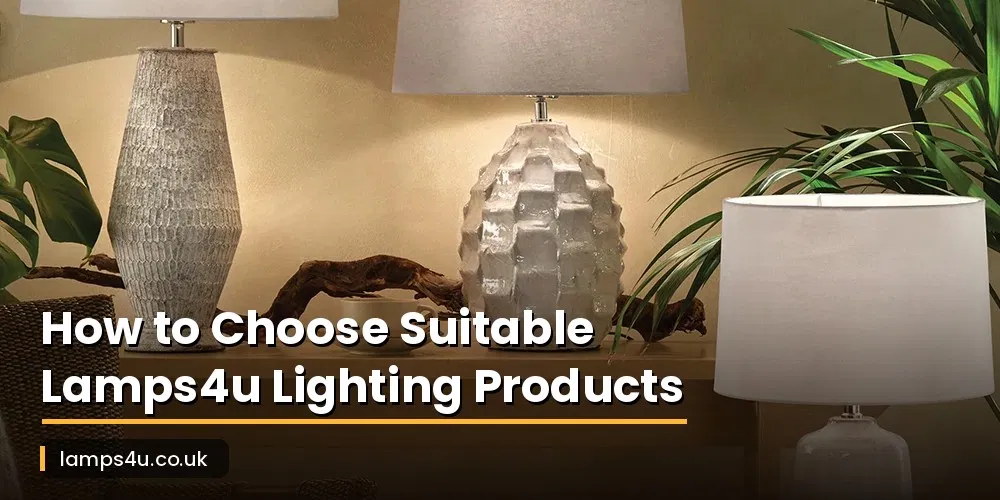
Choosing lighting becomes easier when the requirements of the space are considered before comparing individual products. A structured process helps avoid buying lamps that are too dim, too bright, incompatible or unsuitable for the environment.
Start by identifying the purpose of the light. General lighting provides overall illumination, task lighting focuses on activities such as reading or cooking, and accent lighting highlights particular objects or architectural details. Some rooms benefit from a combination of all three.
Next, assess the physical requirements. Check the fitting type, available space, ceiling height, electrical compatibility and whether dimming is required. For outdoor installations, weather exposure and the fixture’s appropriate ingress protection rating are important.
Finally, compare technical information. Look at lumens for brightness, watts for electricity consumption, colour temperature for the appearance of the light and the manufacturer’s stated operating conditions. A higher wattage does not automatically mean a brighter lamp, particularly when comparing different technologies.
A useful selection process includes these steps:
- Identify the room, task or commercial application.
- Estimate the brightness required for the space.
- Select a suitable colour temperature.
- Check fitting compatibility and installation requirements.
- Compare energy consumption and expected lifespan.
- Review safety certifications and product documentation where applicable.
- Check the warranty, maintenance needs and total cost of ownership.
Following these steps can help homeowners, businesses and facilities managers make better-informed lighting decisions.
Types of Lamps and Lighting Solutions
Different lighting categories serve different purposes. Knowing the basic options can help visitors understand which products may be relevant to their requirements.
| Lighting type | Common applications | Main consideration |
| LED lamps | Homes, offices and commercial buildings | Efficiency, brightness and compatibility |
| Table lamps | Bedrooms, desks and living rooms | Placement, shade design and task requirements |
| Floor lamps | Living rooms and reading areas | Stability, height and light direction |
| Pendant lights | Kitchens, dining rooms and reception areas | Hanging height and light distribution |
| Ceiling lights | Bedrooms, corridors and general interiors | Room coverage and ceiling configuration |
| Commercial fixtures | Offices, shops and other workplaces | Light distribution, operating conditions and maintenance |
| Industrial lighting | Warehouses and industrial facilities | Mounting height, durability and application requirements |
| Outdoor lighting | Entrances, paths and exterior areas | Weather resistance and appropriate protection ratings |
| Fluorescent and CFL lamps | Existing installations and selected applications | Compatibility and responsible end-of-life disposal |
The best product depends on the application rather than the category alone. For example, an LED lamp may be appropriate for a home or commercial facility, but its brightness, colour temperature, beam angle and electrical compatibility still need to match the installation.
Residential Lighting for Comfortable Living Spaces
Home lighting should balance practicality and appearance. Bedrooms, living rooms, kitchens and bathrooms each have different illumination requirements, so using the same type of lamp throughout a property may not provide the best result.
In living rooms, layered lighting can create a flexible environment for reading, entertaining and relaxing. Ceiling fixtures provide general illumination, while table lamps and floor lamps add focused or softer light. In kitchens, brighter task lighting can improve visibility around worktops and food preparation areas.
Bedrooms often benefit from comfortable ambient lighting combined with focused reading lights. Bathrooms require fixtures suitable for the relevant moisture exposure and installation zones, with electrical work completed in accordance with applicable safety requirements.
When comparing Lamps4u-related home lighting options, consider the size of the room, existing décor, available natural light and the activities performed there. A carefully chosen fixture can improve everyday usability without overwhelming the space.
Commercial and Industrial Lighting Applications
Commercial and industrial environments often require lighting plans based on operational needs rather than decoration alone. Offices need comfortable illumination for computer work and meetings, retail spaces may use accent lighting to present products, and warehouses require suitable visibility across aisles, storage areas and working zones.
The mounting height and layout of fixtures can have a major effect on performance. A product suitable for a small office may not provide adequate coverage in a large warehouse. Similarly, areas where detailed work is performed may require a different light level from corridors or storage spaces.
Facilities managers should consider energy use, maintenance access, environmental conditions and relevant workplace lighting requirements. Where appropriate, professional lighting assessments can help determine the required illumination and identify opportunities to improve efficiency.
For industrial projects, check whether products are suitable for dust, moisture, vibration, temperature changes or other conditions present at the site. Specialised environments may also require specific safety approvals or certified equipment, so the manufacturer’s technical documentation should guide the selection.
Energy Efficiency and Responsible Lamp Disposal
Energy efficiency is an important part of modern lighting decisions. Efficient products can reduce electricity consumption while delivering suitable illumination, but the full benefit depends on correct selection, installation and use.
LED products are widely used because they generally offer good energy efficiency and can have a long service life. Replacing an older lamp with an LED alternative may reduce energy use, provided the replacement is compatible with the fitting and meets the required brightness and lighting quality.
Responsible disposal also matters. Some fluorescent, compact fluorescent and high-intensity discharge lamps contain mercury or other materials that require appropriate handling. These lamps should not automatically be treated like ordinary household waste. Local waste-management guidance should be followed, and designated collection or recycling services should be used where available.
Public information has associated Lamps4U and Dulsco with a lamp recycling initiative known as Lampswithbenefit. The initiative was reported as aiming to collect and process used lamps to reduce environmental risks associated with improper disposal. Current participation, availability and service arrangements should be confirmed directly with the relevant organisations.
Advantages and Limitations of Modern Lighting
Modern lighting provides several practical advantages, but no single product is ideal for every situation. Comparing benefits with limitations helps buyers avoid unrealistic expectations.
| Advantages | Limitations or considerations |
| Efficient lighting technologies can reduce electricity use | Initial purchase prices may vary considerably |
| A wide choice of designs supports different interiors | Decorative products may prioritise appearance over light distribution |
| Long-life products can reduce replacement frequency | Actual lifespan depends on quality and operating conditions |
| Different colour temperatures support different environments | Incorrect colour temperature can make a space feel uncomfortable |
| Commercial products can be selected for specific applications | Industrial installations may require professional assessment |
| Lighting controls can provide flexibility | Dimming and smart controls must be compatible |
| Responsible recycling can reduce environmental harm | Suitable collection facilities may not be available everywhere |
A balanced decision considers the total cost of ownership, not just the purchase price. Installation, electricity, replacement parts, maintenance and end-of-life disposal can all affect the overall value of a lighting system.
Important Factors to Check Before Buying Lamps4u Products
Before purchasing lighting products, verify that they meet the needs of the intended installation. Product descriptions can be helpful, but technical specifications provide a stronger basis for comparison.
Important factors include:
- Brightness: Check lumens and consider how the light will be distributed throughout the room.
- Colour temperature: Choose a suitable warm, neutral or cool appearance for the intended activity.
- Energy consumption: Compare wattage alongside brightness and expected operating hours.
- Compatibility: Confirm the lamp base, voltage, dimensions, driver requirements and dimmer compatibility where relevant.
- Build quality: Review materials, heat management and manufacturer information.
- Safety and certification: Check applicable local requirements and independently verifiable product certifications.
- Installation: Determine whether the fitting can be installed safely by the intended person or requires a qualified electrician.
- Warranty and support: Read the actual warranty conditions and confirm how replacement or service requests are handled.
- Environmental requirements: Follow local rules for recycling and disposing of used lamps.
For commercial buyers, it may also be useful to assess maintenance access, spare-part availability, lighting uniformity and expected operating costs. For homeowners, design, ease of installation and compatibility with existing fittings may be more important.
Lamps4u and the Future of Lighting Technology
Lighting technology continues to develop as manufacturers respond to demand for energy efficiency, greater control and more adaptable spaces. Several trends are influencing how lighting products are designed, installed and managed.
LED technology remains an important part of this transition because it can provide efficient illumination across many applications. Product development also focuses on improved light quality, more compact designs, better thermal management and options for controlling brightness and colour.
Smart lighting is another developing area. Compatible systems can allow users to schedule lights, adjust brightness or manage fixtures through connected controls. In workplaces, lighting controls can support more responsive operation when designed around actual occupancy and lighting needs. These features still depend on suitable hardware, configuration and reliable compatibility.
Sustainability is also becoming more relevant to purchasing decisions. Buyers may increasingly examine product durability, repairability, energy consumption, packaging and end-of-life handling alongside initial price. Recycling programmes and appropriate waste management remain important for lamp types that require special treatment.
These trends offer useful context for anyone researching Lamps4u and lighting products. However, features such as smart controls, advanced automation and specific environmental programmes should only be attributed to an individual supplier when its current documentation confirms their availability.
Why Reliable Product Information Matters
Choosing a lighting product is easier when the information provided is accurate, clear and relevant. A useful supplier description should explain the product’s intended application, technical specifications, installation requirements and any important operating limitations.
Customers should be able to compare brightness, power consumption, dimensions and compatibility before committing to a purchase. For commercial installations, technical data sheets can help project managers and electricians assess whether a product meets the project’s requirements.
It is equally important to verify company information. Similar business names and websites can refer to different organisations, so visitors should confirm the exact website, supplier identity, contact details and current product range. A business’s location, certifications or recycling partnerships should not be assumed to apply to another website using a similar name.
A careful approach protects buyers from mismatched products and helps them make decisions based on evidence rather than marketing language. For Lamps4u visitors, checking the original supplier’s current information is the most reliable way to confirm product availability and service details.
Frequently Asked Questions
What is Lamps4u?
Lamps4u is a search term associated with lighting products, fixtures and related solutions. Its precise meaning depends on the business or website being referenced.
What does Lamps4U FZCO do?
Public information describes Lamps4U FZCO as a Dubai-based lighting manufacturer and distributor associated with energy-efficient lighting products and fittings.
What types of lighting are available through Lamps4u?
Relevant lighting categories include LED lamps, indoor fixtures, commercial lighting and specialised products. The actual range depends on the particular supplier and its current catalogue.
Is Lamps4u associated with energy-efficient lighting?
Public descriptions of Lamps4U FZCO associate the business with energy-efficient lighting. Specific product efficiency should be verified through the relevant technical specifications.
What is the Lampswithbenefit initiative?
Lampswithbenefit was reported as a lamp recycling initiative involving Lamps4U and Dulsco, intended to support the responsible collection and processing of used lamps.
How do I choose the right lamp for my home?
Consider the room’s purpose, required brightness, colour temperature, fitting compatibility, energy consumption and design before selecting a lamp.
Are LED lamps more energy-efficient than traditional bulbs?
LED lamps generally use less electricity than many traditional incandescent bulbs for comparable light output, although performance varies by product.
How should used fluorescent lamps be disposed of?
Follow local waste-management guidance and use an appropriate collection or recycling service where required, because some fluorescent lamps contain mercury.
What should businesses consider when choosing industrial lighting?
Businesses should assess illumination requirements, mounting height, operating conditions, energy use, maintenance access and any applicable safety standards.
Where can I verify Lamps4u products and services?
Check the current official website and documentation of the specific Lamps4u business you intend to use. Confirm its product catalogue, contact information, certifications and service availability before purchasing.